
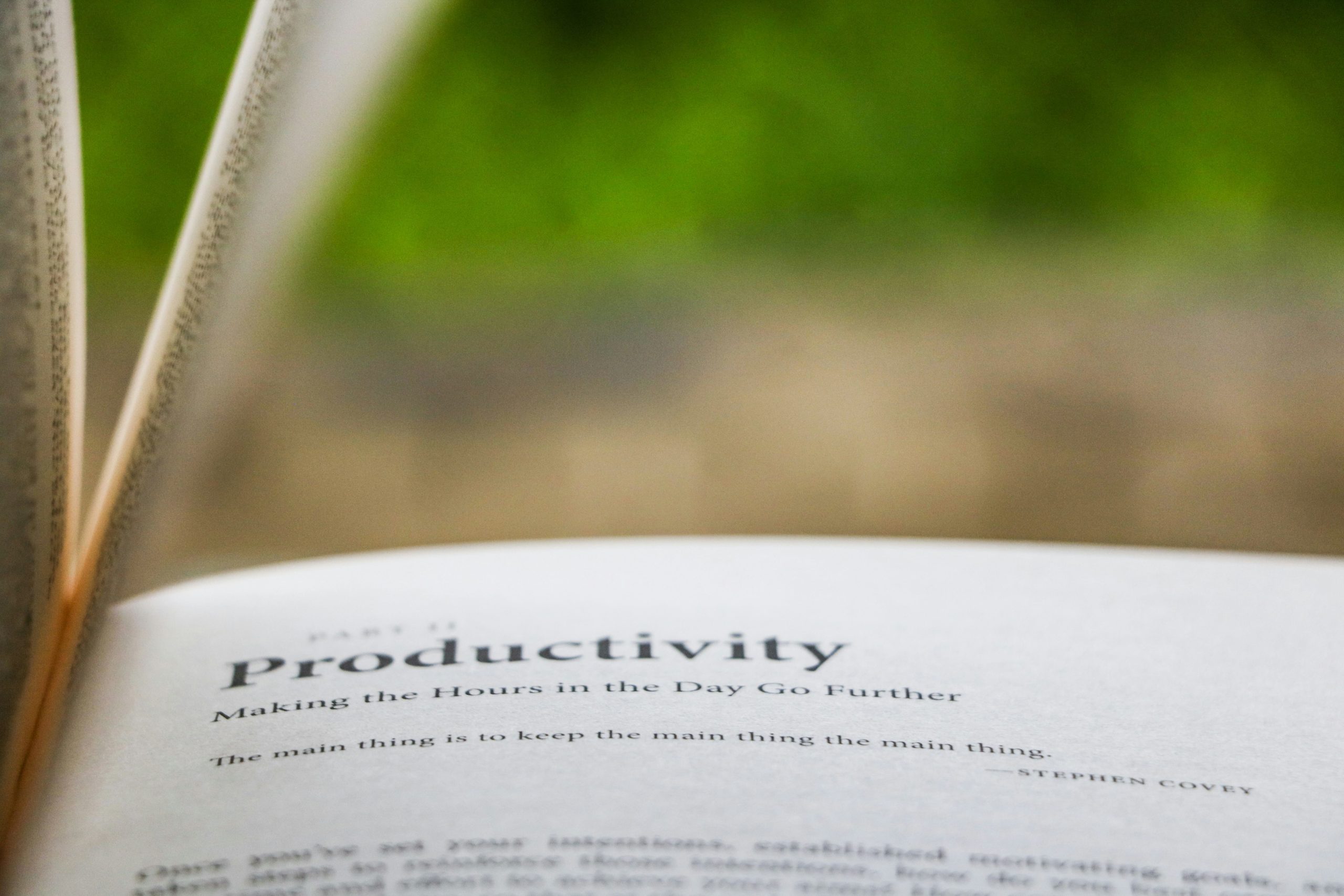
You spend an exhausting day at work, tick off hundreds of small things, and still end the day feeling like you accomplished nothing. Why? Because most productivity advice focuses on doing more things, not the right things.
For the past decade, I’ve worked with entrepreneurs and business leaders to fix their workflows. What I’ve found is consistent: doubling your output was never about working longer hours or buying an expensive task management tool. It’s about removing the everyday friction that quietly drains your focus. Here are five habits that actually move the needle.
Habit 1: The “Daily Highlight” Process
We’ve all stared at a to-do list with 20 items on it and felt paralyzed — with too many things demanding attention, nothing actually gets your full focus. The Daily Highlight process fixes this by having you choose one non-negotiable task that defines your day.
How to apply it:
- Write it down first. Before you open your inbox, write your one highlight on an actual sticky note.
- Time-box it. Set aside 90–120 minutes for this task, ideally before lunch.
- Protect the time. Silence your phone, close messaging apps, and don’t look away until it’s done.
This habit leans on the Pareto Principle — the idea that roughly 80% of your results come from about 20% of your actions. Naming your highlight in advance keeps your most important work from getting buried under everything trivial.
Habit 2: Strategic Energy Mapping
Traditional time management has a blind spot: you can schedule “write from 2:00–3:00 PM,” but if your energy is gone by then, you’ll just sit there staring at a screen. Time isn’t the only resource you’re managing — your energy is too.
Chronotype mapping:
Track your energy over a normal 48-hour period. Notice when you’re naturally alert versus when you’re relying on coffee just to function.
- Peak energy hours — reserve these for intensive, analytical, or creative work.
- Trough energy hours — use these for lower-stakes tasks like data entry, routine emails, or passive meetings.
- Recovery hours — disconnect from devices completely.
Working with your biological rhythm, rather than against it, makes it noticeably easier to tackle demanding work without fighting yourself the whole time.
Habit 3: The 5-Minute Brain Dump
Your mind is a poor filing cabinet. Holding onto every open loop — the electric bill, the client presentation, a dozen half-formed worries — eats up working memory you need for actual thinking. Psychologists call this the Zeigarnik Effect: the tendency to remember unfinished tasks far more persistently than completed ones.
Clearing the mental clutter:
- Grab a blank sheet of paper, either first thing in the morning or right before deep work.
- Write down everything — to-dos, half-formed ideas, scattered anxieties.
- Move anything actionable into your real task manager; cross the rest off without guilt.
- Notice the difference — an emptied mental inbox tends to produce sharper, less scattered focus.
Externalizing your thoughts onto paper frees up the mental bandwidth you need to actually finish your Daily Highlight.
Habit 4: Batching the Shallow Friction
Context switching is one of the quietest productivity killers there is. Research on workplace interruptions (led by Gloria Mark at UC Irvine) found it can take 20 minutes or more to fully regain focus after a single interruption. Checking email or chat every ten minutes means you’re rarely actually deep in anything.
The batching technique:
- Set administrative blocks. Handle email, chat, and approvals only during two fixed windows — for example, 11:30 AM and 4:30 PM.
- Enforce a communication blackout outside those windows — notifications off, on every device.
- Create templates for anything you write repeatedly, using a text expander or saved replies.
This creates a hard boundary around deep work, saving hours of wasted transition time every week.
Habit 5: The Psychological Shutdown Ritual
Work that never gets a clean ending bleeds into your evening — and without a real end to today, tomorrow starts from a deficit. A consistent shutdown ritual signals to your brain that the workday is genuinely over.
Completing the loose ends (about 10 minutes):
- Review your list. Update your task manager and cross off what’s actually done.
- Plan tomorrow. Pick tomorrow’s Daily Highlight now, so you start the day already knowing your focus.
- Say it out loud. A short verbal phrase — even something as simple as “shutdown complete” — creates a clear psychological boundary between work and rest.
Sustainable productivity isn’t just intense effort. It’s intense effort followed by genuine, unapologetic rest.
Sarah’s Story: Reorganizing a 60-Hour Workweek
Editor’s note: The following is a client example from the author’s coaching practice. Details are shared with permission.
A year ago, I coached a marketing director — I’ll call her Sarah — who was working roughly 60 hours a week. She was well-organized but constantly exhausted from firefighting her team’s daily emergencies.
We rebuilt her workflow around these five habits. Sarah picked one Daily Highlight (writing creative campaign copy) and scheduled it during her highest-energy window, 9:00 AM. Team check-ins and email were confined to two 45-minute blocks. She added a hard shutdown at 5:30 PM.
Within a week, she stopped taking her laptop home. By week two, she was producing noticeably more campaign work in meaningfully less time — not because she worked harder or faster, but because she’d removed the cognitive friction that was quietly draining her all day.
Troubleshooting Common Productivity Roadblocks
Even a good system runs into friction. Here’s how to handle the most common issues:
| Roadblock | Root Cause | The Fix |
|---|---|---|
| Can’t start the Daily Highlight | Task feels too broad or intimidating | Break it into a 5-minute micro-step to build momentum |
| Crashing during “peak energy” blocks | Poor sleep, dehydration, or a sugar spike | Audit your morning diet — swap heavy carbs for protein, and hydrate earlier |
| Constant interruptions from teammates | Boundaries haven’t been clearly communicated | Set your status to “Deep Work — Do Not Disturb” and use visible headphones as a signal |
| Skipping the shutdown ritual | Guilt over an unfinished list | Accept the list is never fully “done” — forgive yourself and defer the rest to tomorrow |
Frequently Asked Questions (FAQ)
How do I use the Daily Highlight if my boss constantly assigns urgent tasks? Communicate your priority early. A quick message stating your primary focus — and asking whether new requests should override it — aligns expectations and protects your deep work block without seeming uncooperative.
Does energy mapping work for night owls stuck on standard corporate hours? Yes, but it takes some negotiation. If your peak energy hits at 8:00 PM, shift heavier analytical work to late afternoon where possible, and reserve groggy mornings for shallow admin tasks or passive meetings.
What if my 5-minute brain dump creates overwhelming anxiety instead of relief? A long, unsorted list can feel intimidating at first. Counter it by immediately picking three items you can delete, delegate, or defer right now — the page is just holding your thoughts so your brain doesn’t have to; you don’t need to solve everything today.
How do I stick to a shutdown ritual while working remotely from my bedroom? Physical boundaries matter more for remote workers, not less. After your shutdown routine, close the laptop, put it fully out of sight, and take a 10-minute walk to simulate a commute — a physical transition helps your brain register that work has actually ended.
Your Next Step for Tomorrow Morning
Productivity isn’t about squeezing every last drop of effort out of yourself until you burn out. It’s about intentionally directing limited focus toward what actually drives results. A Daily Highlight, energy mapping, a brain dump, batched admin, and a real shutdown ritual — used together, these habits meaningfully increase what you get done without increasing how hard you’re working.
Don’t try to adopt all five at once. Tonight, pick just one task as tomorrow’s Daily Highlight. Write it on a sticky note, put it on your keyboard, and tackle it first thing in the morning.