
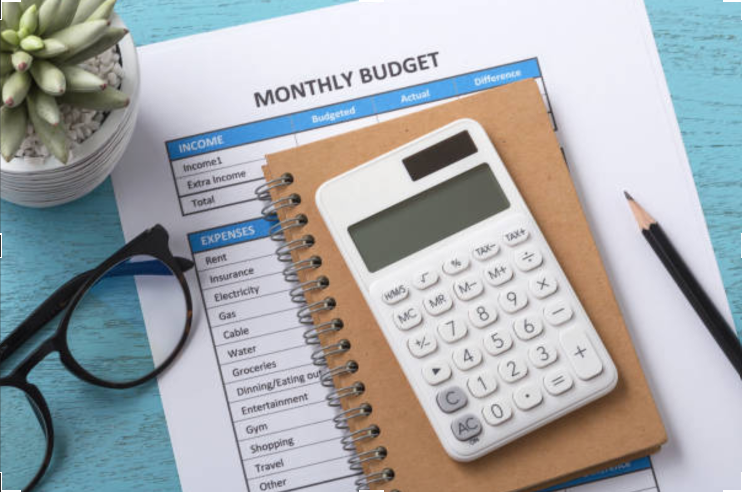
A monthly budget is simply a plan for how you will use the money available to you. A useful budget starts with your actual take-home income and your real spending—not with a percentage or spending rule that may not fit your circumstances.
For example, if you bring home $2,400 a month, you could begin by listing your regular bills, everyday expenses, savings goals, debt payments, and less-frequent costs such as insurance, gifts, repairs, or annual subscriptions.
The goal isn’t to eliminate everything you enjoy. It’s to understand where your money is going, make room for important expenses, and give yourself a realistic plan that you can continue using from month to month.
1. Start With Your Actual Monthly Income
Before deciding how much you can spend, work out how much money you actually have available.
For someone paid through employment, this usually means starting with take-home pay—the amount that reaches your bank account after taxes and other payroll deductions.
If you have multiple income sources, such as freelance work or a second job, include income that you can reasonably expect to receive. Be more cautious with irregular or unpredictable income. Building a budget around money you may not receive can leave you short when bills are due.
If your income changes from month to month, use your past income and spending records to create a realistic estimate rather than assuming that your highest-earning month will continue.
Consumer.gov recommends gathering pay information and bills before creating a budget and accounting for other income that is actually available to you.
Practical starting point:
Monthly money available − monthly expenses and planned savings = amount left over
If the result is negative, your current plan is not sustainable. That doesn’t necessarily mean you have to make drastic cuts; it means you need to identify which expenses can realistically change.
2. List Both Regular and Irregular Expenses
One of the easiest ways to create an unrealistic budget is to consider only the bills that arrive every month.
Start by listing your regular expenses, such as:
- Rent or mortgage
- Utilities
- Groceries
- Transportation
- Insurance
- Phone and internet
- Loan or credit payments
- Childcare or school-related costs
- Subscriptions
- Entertainment and hobbies
Then look for expenses that happen less frequently.
These might include:
- Annual insurance payments
- Vehicle repairs and maintenance
- Medical expenses
- Gifts
- Holidays
- School expenses
- Home repairs
- Travel
- Membership renewals
If you forget these costs, a month can appear affordable on paper but become difficult when a large annual bill arrives.
A useful approach is to look back through several months of bank or credit-card statements. CFPB guidance specifically recommends reviewing several months so less-frequent expenses aren’t overlooked.
3. Group Your Spending Into Simple Categories
You don’t need dozens of categories to build a useful budget. Start with a system that is detailed enough to reveal problems without becoming difficult to maintain.
| Category | Examples | Purpose |
|---|---|---|
| Essential expenses | Housing, utilities, groceries, basic transportation | Covers necessary living costs |
| Flexible spending | Dining out, entertainment, hobbies, shopping | Gives you room for discretionary spending |
| Debt payments | Credit cards, personal loans, other debt | Reduces outstanding balances |
| Savings | Emergency savings, short-term goals, retirement | Prepares for future needs |
| Irregular expenses | Repairs, gifts, annual bills, travel | Prevents occasional costs from becoming surprises |
These categories are only a starting point. Your own budget should reflect your circumstances.
For example, transportation may be an essential expense for someone who commutes to work but a smaller category for someone who works from home.
4. Give Every Dollar a Purpose
Once you know your income and expenses, decide what you want your remaining money to do.
A simple priority order can be:
- Cover essential living expenses.
- Make required debt payments.
- Set aside money for upcoming irregular expenses.
- Contribute to savings goals.
- Use the remaining amount for flexible spending.
This doesn’t mean every person should follow exactly the same order. Someone dealing with high-interest debt may need a different strategy from someone who already has substantial emergency savings.
The important point is to make the decision before the money disappears into unplanned spending.
5. Treat Savings as Part of the Budget
Savings should not necessarily be whatever happens to remain at the end of the month.
Instead, include a realistic savings contribution in your budget from the beginning. Consumer.gov notes that savings can be included as one of the expenses in a monthly budget.
If you can automate a transfer to a savings account after receiving your income, you may find it easier to save consistently. The FDIC also recommends regular saving and describes automatic transfers as one practical way to build savings over time.
You don’t need to start with a large amount if your current finances don’t allow it. A sustainable amount that you can consistently maintain is more useful than setting an unrealistic target and abandoning it.
Example of an illustrative savings plan
The amounts below are examples, not recommended targets:
| Savings goal | Example monthly amount | Purpose |
|---|---|---|
| Emergency savings | $200 | Unexpected expenses |
| Long-term savings | $250 | Future financial needs |
| Personal goal | $150 | Travel or a major purchase |
| Total | $600 | — |
Your numbers may be much lower or higher depending on your income, expenses, debt, and goals.
“ways to save money every month“
6. Build an Emergency Fund Gradually
An emergency fund is money set aside for unexpected expenses or financial disruptions.
Examples include:
- An urgent car repair
- A necessary home repair
- An unexpected medical bill
- A temporary loss of income
- Another significant expense that isn’t part of your normal monthly budget
There is no single emergency-fund amount that works for everyone. Your target should take into account your income, essential expenses, job stability, family responsibilities, insurance coverage, and other circumstances.
If you are starting with little or no emergency savings, focus first on building the habit. Once you have some money set aside, you can gradually increase the amount.
The CFPB recommends setting aside money for unexpected expenses and notes that even a small amount of savings can provide some financial protection.
7. Reduce Waste Without Making Your Budget Miserable
Cutting every enjoyable expense is rarely a good long-term strategy.
Instead, look for spending that provides little value to you.
For example:
- Cancel subscriptions you no longer use.
- Compare prices before major purchases.
- Cook at home when it makes sense for your household.
- Review recurring services periodically.
- Wait before making expensive impulse purchases.
- Look for lower-cost alternatives to services you use regularly.
The right question isn’t always, “How can I spend as little as possible?”
A better question is:
“Which expenses are worth keeping, and which ones could I reduce without making my life unnecessarily difficult?”
A budget should help you make deliberate choices rather than turn every purchase into a source of guilt.
8. Track Your Actual Spending
Creating a budget is only the first step. You also need to compare your plan with what actually happened.
At the end of each week or month, check:
- How much did I actually spend?
- Which categories were higher than expected?
- Which expenses were lower?
- Did an unexpected expense appear?
- Did I save the amount I planned to save?
- Is the budget still realistic?
Consumer.gov recommends using a budget each month and comparing planned spending with actual spending so you can make better decisions for the following month.
You don’t have to record every purchase manually if your bank or budgeting app already provides useful spending information. The important thing is to review the information regularly.
9. Adjust the Budget When Your Circumstances Change
A budget isn’t a contract that can never be changed.
Your financial situation can change because of:
- A new job
- A change in income
- Moving home
- A new family responsibility
- Paying off a debt
- Higher housing or transportation costs
- A new savings goal
When something significant changes, update your budget rather than continuing to follow numbers that no longer reflect reality.
It can also help to review your budget when recurring costs change, such as insurance, utilities, subscriptions, or loan payments.
10. Use a Simple Monthly Review
A short monthly review can keep your budget useful.
Ask yourself:
What went well?
Identify categories where your spending matched your plan.
Where did I overspend?
Look for patterns rather than blaming yourself for one unusual purchase.
What did I forget?
Add irregular expenses that weren’t included in the previous budget.
What needs to change next month?
Make a few specific adjustments rather than completely rebuilding the budget every time.
For example, if you repeatedly spend more on groceries than planned, the solution may be to change the grocery budget rather than repeatedly setting an amount you know is unrealistic.
A Simple Monthly Budget Example
Suppose your take-home income is $2,400.
An illustrative budget might look like this:
| Category | Example amount |
|---|---|
| Housing and utilities | $1,000 |
| Groceries | $350 |
| Transportation | $200 |
| Debt payments | $200 |
| Savings | $300 |
| Insurance and irregular expenses | $150 |
| Flexible spending | $200 |
| Total | $2,400 |
This is not a recommended percentage or financial rule. It is simply an example of how a budget can assign your available income to different priorities.
Your own numbers should come from your actual income, bills, spending patterns, and goals.
Common Budgeting Mistakes to Avoid
Forgetting irregular expenses
Annual or occasional bills can cause problems when they’re not included in your plan.
Making the budget too complicated
If maintaining your budget takes so much time that you stop using it, simplify it.
Setting unrealistic spending limits
A budget that consistently fails to match your real spending isn’t helping you make better decisions.
Treating savings as an afterthought
Include realistic savings goals in your plan rather than assuming you’ll save whatever remains.
Never reviewing the plan
Your budget should change when your circumstances change.
Cutting everything enjoyable
Leaving no room for reasonable discretionary spending can make a budget difficult to maintain.
Conclusion
A useful monthly budget doesn’t need to be complicated. Start with your actual take-home income, list both regular and irregular expenses, set realistic savings goals, and compare your plan with your real spending.
The purpose of budgeting isn’t to control every purchase. It’s to help you understand your financial position and make deliberate choices about what matters most to you.
If your first budget doesn’t work perfectly, adjust it. A realistic budget that you review and improve regularly is more useful than an ideal plan that you cannot maintain.
Frequently Asked Questions
What is a monthly budget?
A monthly budget is a plan for how you will use your income during a month. It accounts for expenses, savings goals, debt payments, and other financial priorities.
How often should I review my budget?
Review it at least once a month. A quick weekly check can also help you spot overspending before it becomes a larger problem.
How much should I save each month?
There is no single amount that is appropriate for everyone. Start with an amount that fits your income and necessary expenses, then adjust it as your financial situation changes.
Should savings be included in a monthly budget?
Yes. Treating savings as part of your planned expenses can make it easier to allocate money toward emergencies and other financial goals.
What if my expenses are higher than my income?
First, check that you included all income and expenses accurately. Then identify expenses that can realistically be reduced or postponed. If the shortfall is caused by essential costs, you may need to consider broader changes to your income, housing, debt, or other major expenses rather than relying only on small spending cuts.
Sources: Consumer.gov, Consumer Financial Protection Bureau (CFPB), and Federal Deposit Insurance Corporation (FDIC).